Data Science/Data Structure & Algorithm
[Data Structure] Red-Black Tree - 1
Chan Lee
2025. 5. 2. 11:14
A red-black tree is a BST with two node types, namely red and black, and supporting operations that ensure the tree is balanced when a node is inserted or removed.
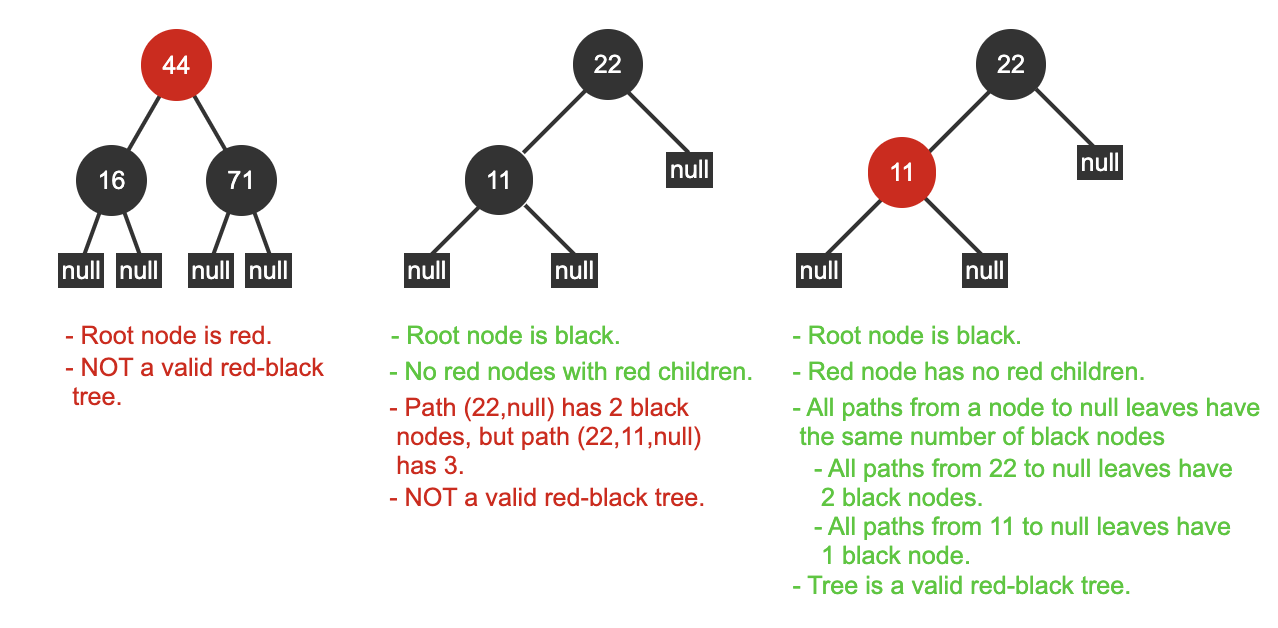
Rules:
- Every node is colored either red or black.
- The root node is black.
- A red node's children cannot be red.
- A null child is considered to be a black leaf node.
- All paths from a node to any null leaf descendant node must have the same number of black nodes.
These rules ensure that a tree with N nodes will have a height of O(log N).
After an insertion or removal of a node, the red-black tree can be unbalanced.
Same as AVL trees, red-black trees use rotations to rebalance the tree.
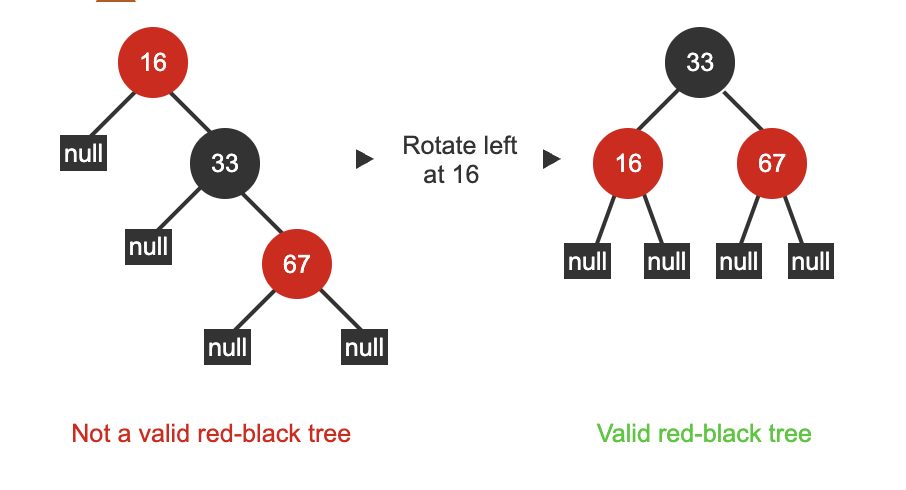
RBTreeRotateLeft(tree, node) {
   rightLeftChild = node⇢right⇢left
   if (node⇢parent != null)
      RBTreeReplaceChild(node⇢parent, node, node⇢right)
   else { // node is root
      tree⇢root = node⇢right
      tree⇢root⇢parent = null
   }
   RBTreeSetChild(node⇢right, "left", node)
   RBTreeSetChild(node, "right", rightLeftChild)
}